Pages

Showing posts with label assessment. Show all posts

Wednesday, June 14, 2023

Strategies for Getting Students to Submit Work

(Estimated Reading 5 minutes)


Are you tired from chasing students for overdue work? Do you want to decrease the number of students who do not submit work? Here are some strategies I have found that work to increase submission rates.


I was teaching in a school that had ten classes per subject - I had one class, and I was chatting to another teacher that had two classes about submission rates of a particular task. I had three students that had not submitted by the due date, a 12% non-submission rate. The other teacher with two classes had the majority of the class not submit in both classes. He was running near 80% non-submission! Why was his submission rate so dismal? 


Communication of Expectations and Consequences


During our conversation he made statements like “I know what it is like when you are young, so many assignments to submit, work, sport etc” and “I wasn’t very diligent at submitting myself when I was their age.” He was being very empathetic to the students for their lack of submission - I suspect he may have been sending the students all the wrong signals!


Be clear with your discussions with students. These are the points I cover with my students at the time of setting the task:

  1. This is the due date. Make a sticky note on your desktop. Set an alert on your phone. Write it in your diary/phone/calendar. Do this now. Show me that you have done this.

  2.  If you think you have extenuating circumstances and won’t submit on time request extensions in writing via email/LMS message before the due date.

  3. I will contact your parents via phone if you do not submit.

  4. If you don’t submit I will help you <insert times and places> so i can help you with your work.

  5. Make sure students know your marking time frame - that non-submission holds up the return of work for the entire class. To not submit affects me and the rest of the class.


This sets the tone for the students, due dates are important, non submission is not an option - you will finish the work even if it is at recess/lunch/after school!


Mandate a plan/outline


Written work is often a stumbling block for students - where do I start? How will I know I am heading in the right direction? Uncertainty leads to procrastination. Most of my writing tasks have an inbuilt outline process which is done in class. With teacher feedback on their outline they have a clear direction for their assignment and they are less likely to get stuck. This process increases submission and decreases plagiarism. I wrote a previous blog post about outlines. 


Outlines mandatory done in class (open browser) dot points only hyperlinked to exemplar contains success criteria (rubric) feedback given before the next lesson   Benefits include   improves quality of final product improves submission rates gets students started helps students sequence their essays provides interim feedback

Unpack an Exemplar


Exemplars orient the students as to what success looks like. The critical part of an exemplar is that it is a SIMILAR task not THE task. I have seen teachers give exemplars of the same task which results in less confident students plagiarising the exemplar. Exemplars give students the confidence that they are on the right track.


Exemplars show the language features and structure of the genre. Annotations aid students further.


Use a hyperlinked template


A good template includes basic structure of the task and is hyperlinked to the task sheet and the exemplar. Having the basic structure in a document is a lot less daunting than starting with a blank document. Having hyperlinks to all the resources such as a task sheet and exemplars means the students don’t have to go hunting for them.


Email all parents (BCC)


I email parents for very important due dates. There is a significant proportion of students that forget school even exists once they take a step outside of the gates, and they only recall due dates when they are seated in class. Parents can be your greatest allies in submitting work!


Have clear checkpoints


Big tasks need to be broken down and it is useful for students to have interim deadlines for various parts of the task. You can set up an assignment template where the first page contains the checkpoints as shown in the example below. Students change the colours to indicate their progress or to request drafting.

For students that have missed interim deadlines a quick email home improves your chances of getting the work on the final due date.


Use Google Docs


I use Google Docs, specifically Doctopus which pushes out copies of the template. As I am the owner of the document students I can’t be shared out, the student can’t delete the document. If they claim their work has disappeared I can recover it using version history. But most importantly I can see their progress at any time and give feedback as the work is in progress. I check on the levels of completion just before the due date and send out an email to parents registering my concern.


Negotiate the due date with students for the whole class


When determining the due date, consult with your students. It may be that several other things are due on the same day. Students are more likely to meet a deadline when they have had input as to the timing.


Grade student work in a timely fashion


Imagine the students busting a gut to get work in on time, then the teacher takes 8 weeks to grade the work. It is unlikely that students won’t be as prompt with the next task if you still have the current one. Give an undertaking to the students about when they can expect the work returned to them - I will often negotiate this with the students at the same time as negotiating the due date. 


Focus on submission as a whole school


What happens in other classrooms does impact what happens in yours. In one school I was in, one particular faculty were notorious for their low expectations for submission. They often were marking multiple late tasks on the night of the report deadline. This makes it hard for students when teachers are inconsistent.


Trick students


Tell the students that the due date is on <due date> then change the submission date for the whole class. The initial due date creates a sense of urgency at the beginning of the task then the change in date makes the students feel like you are giving them extra time to polish their work. I say something like “I know the due date is tomorrow, Friday, but I won’t have time to mark them this weekend so I will be changing the submission time to Sunday night. Students super appreciate having extra unanticipated time. This also works when you have a number of students request extensions - it brings everyone in line. Use this judiciously.


TLDR: Too long, didn’t read -


Communicate clear expectations of submission and consequences of non-submission. Expect written extension requests.  Mandate a Plan/Outline Unpack an Exemplar Include Checkpoints Push out a Template  Negotiate Class Deadlines   Monitor progress using Google Docs

Are there any strategies that you have used that improve submission that have not been listed above?

Wednesday, May 24, 2023

How I Helped My Students Ace Difficult Questions

(Estimated Reading Time: 1.5 minutes)

All teachers have their pain points - students struggle with <this>, students just can’t do <that>. By stepping back and focusing on the problem, trying something different, eventually most problems can be overcome. In this post I am going to explain how I overcame my students' struggle with osmosis questions in tests and exams. 


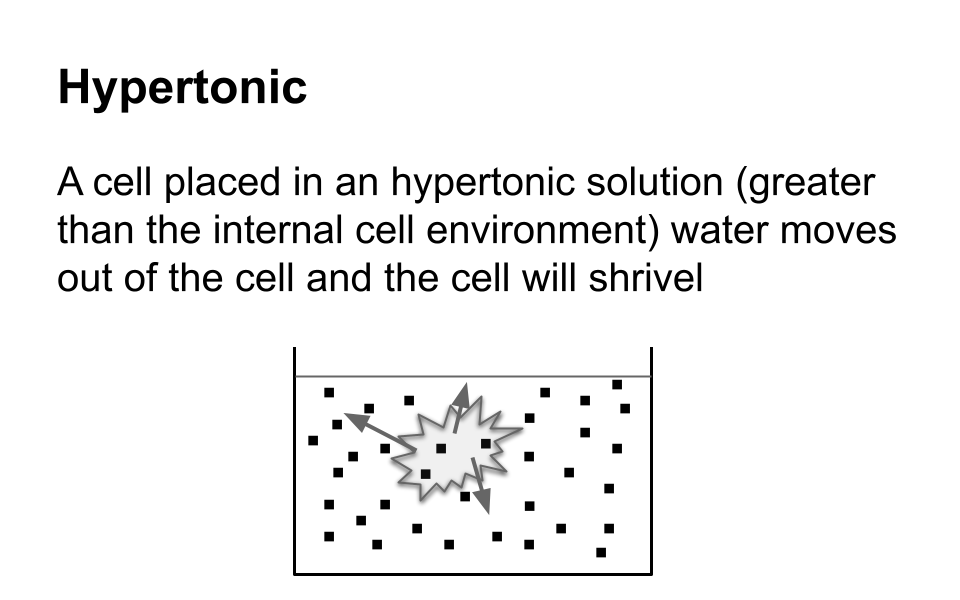
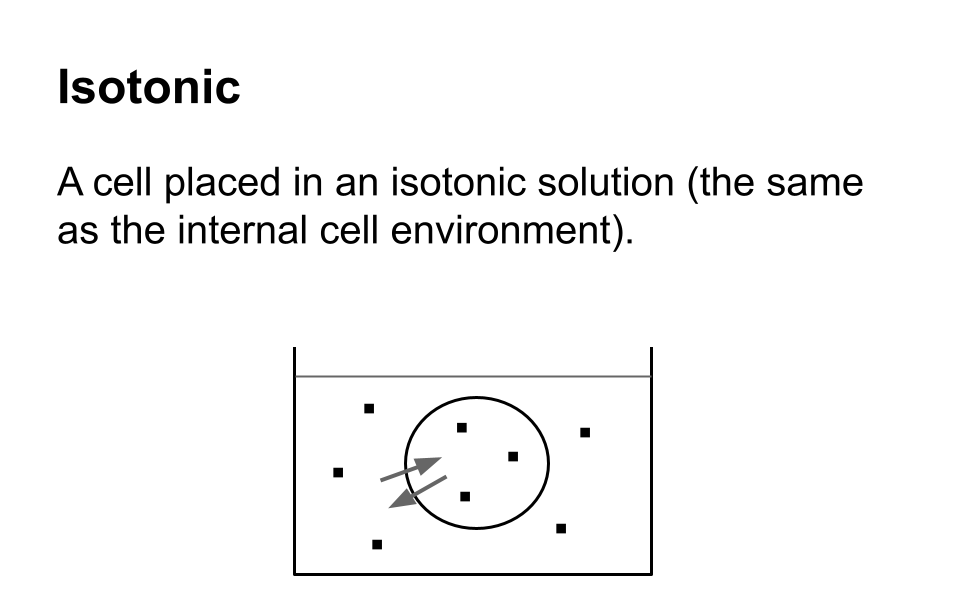
I realised that my Biology students struggled with conceptual questions, such as osmosis. Osmosis is the movement of water through a semipermeable membrane. 

There are three scenarios:


Students could learn these three scenarios, but when they tried to apply their knowledge to a new situation, they had great difficulty. I suspected that keeping the basic understanding of these three different situations in their working memory while at the same time trying to decode a new situation was too much to do in their heads. 


So I tried an experiment. I included this diagram as shown below in a formative mini-test (assessment for learning). 


Student results improved dramatically as they referred to the diagrams and applied them to the new situations in the questions. 


My next step was to train them to rote learn the diagram, first we used the look, cover, write, check method. Then at the beginning of each lesson the students had to try and reproduce the diagram from their memory. After a few lessons all students all had nailed this task. I sporadically sprung the task mid-lesson, just to make sure they had it.


When I handed out the summative test (assessment of learning) they were instructed at the beginning of the test to draw that diagram on their scrap paper. When they got to the difficult osmosis questions they were to refer back to the diagram as they had done in the formative test. The results in the osmosis questions were outstanding. My final step was to remind the students before the final year external exam to use the reading time in the exam to write their osmosis reference diagram on their scrap paper. 


What conceptual questions in your subject would benefit from this approach in reducing cognitive load? 


Wednesday, April 26, 2023

Mandating Outlines as Part of an Assessment

(Estimated reading time 2.5 minutes)

Quite some time ago ( >10 years) I was sent to a Professional Development day that featured John Hattie. Although I was not in agreement with everything he had to say, there were some takeaways that changed my practice, and one of those was the use of outlines.


In his list of effect sizes was: Making an outline before writing a paper, effect size .85. (that’s good :-)


Benefits of Outlines


It made sense to me - if students are forced to make an outline they think holistically about an essay/paper/assignment instead of obsessing over the first sentence or paragraph. They are more likely to sequence the information logically. It helps students who are usually paralysed by the thought of an assessment get started, which increases submission rates. Ensuring there is a cycle of feedback on the outline increases the quality of the final submission.


More importantly, in the event that the student does not submit the essay/paper you could assess the outline for elements such as discussion, analysis or evaluation, even though it is not a fully fledged essay they can often meet parts of the assessment and sometimes even scrape through with a C-. At worst they can usually meet a D which enhances their grade point average in comparison to an NA (Not Assessed).


Outlines mandatory done in class (open browser) dot points only hyperlinked to exemplar contains success criteria (rubric) feedback given before the next lesson   Benefits include   improves quality of final product improves submission rates gets students started helps students sequence their essays provides inter


The Process


This is an example of an outline. To prevent students from trying to write the entire essay I restrict them to a maximum of one page. Apart from the dot pointed structure of the outline, I include a rubric so students can reference the success criteria, I also include a hyperlink to an exemplar outline (an A example of a similar task). 


It is important to present the task in the lesson before the outline lesson, I give the students the task sheet and set research for homework. Most students get started on their research, some almost finish the outline, and yet others don’t do anything before class. 


Just before the class (usually a double lesson) I push out documents for the students to write in, via Google Docs. By using Google Docs I can monitor all the outlines as they evolve and see who needs assistance getting started. If any students have completed the outline before coming to class I can give feedback on it and grade it during the class, they can then get started on their essay.


By monitoring the folder in my Google Drive I can order student work by “last modified”. By seeing that Johnny hasn’t edited for the last 15 minutes is very effective at identifying students that are stuck.


By monitoring the google folder you can see when students have last modified their document.


Through the use of Google Docs not only can you have greater support and supervision of student work, but it can also be used as a tool to detect plagiarism. If plagiarism is suspected, the Chrome extension Draftback can be used. It can play back the version history of any Google Doc as a condensed video, this shows edits and detects slabs of text flying in. I have used this tool before and it can provide the proof you need to establish plagiarism. Outlines and apps like Draftback are probably even more important in the era of websites that can automatically paraphrase (e.g. https://www.paraphraser.io/) and AI tools like ChatGPT. Usually if you advise students that you have access to this tool they are less likely to plagiarise in the first place.


Wednesday, April 5, 2023

Supporting Students Revising for Tests & Exams

(Estimated Reading Time: 2 minutes)

Most teachers who have been in the game for a while lament that students' ability to retain information long enough to be tested is decreasing. By leveraging technology you can help support students in their revision.


I have found that over the years students seem less organised, perhaps a byproduct of the digital age. Students with patchy attendance miss learning materials, and in the covid age it is ever more important to ensure students have every opportunity to access learning materials. So what can we do to help students?


I use Google Drive to store all my resources, so every resource has a hyperlink. By sharing a single Google Doc that collates the hyperlinks of revision materials, all learning materials are organised and collated. The example below is a revision document I generated for my year 11 Psychology class. 


By collating the hyperlinked revision materials into a table sorted by topic and type of resource, makes the resources more accessible to students.


This strategy scaffolds students that struggle with organisation, such as students with ADHD, so by using this strategy you are being more inclusive. For those that may feel as if I am doing student work for them, that students should be organising their own materials, I counter that this model provides the blueprint for organising learning materials beyond my class and into university. This document in itself is a lesson I want my students to learn - hyperlink everything!


I usually couple that with an email home to get parents and caregivers onside to remind the students to prepare for the test. I had child of my own that would predictably say “I don’t have any homework” and I know I would be very grateful when teachers did message home to keep me in the loop. An email home is made even better by giving parents access to the revision materials, it encourages them to be a participant in their child’s revision.


For example:


Emails to caregivers should always be BBCed, short, with vital information such as dates and hyperlinks to resources to assist them in supporting their child. Always thank parents for their support in advance!


And one more tip, when you have crafted a good email, put it in a document (for me always a Google doc) with the filename of "Parent Email". I then accrue a bank of emails for different occasions that I rejig and reuse, saving time in crafting important correspondence. Even better - share the document with other teachers in your teaching team and encourage them to add their emails. That way everyone can jump on board your initiative.

Wednesday, March 29, 2023

Action Research - Turning a fail into a win

(Estimated Reading Time: 3 minutes)

Action Research is a method used for improving practice. I have taught in several schools where there was an expectation that all teachers conduct at least one action research cycle per year. Some of the most important understandings I have gained about teaching have been gained by this powerful practice.


Action research is a method used for improving practice. It involves measuring or observing, action, evaluation, and critical reflection


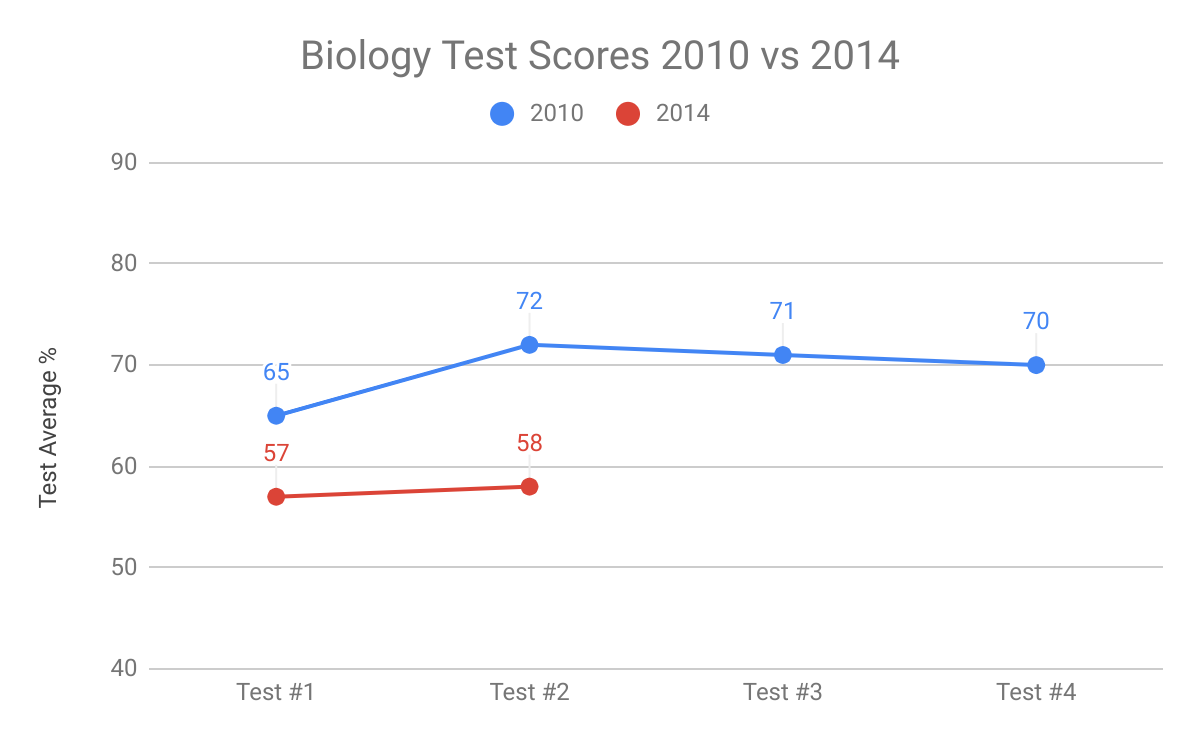
In 2014 I had a year 12 class that snowballed into a massive challenge. I felt demoralised after marking the very first test, and even more deflated after the second. I graphed my 2010 class with my 2014 biology class to compare the two cohorts. Depressing!

I chose to make the class the focus of my action research, so I decided to trial exit cards. I used Pear Deck and Google Forms to determine how much the class knew or understood. I retaught anything that was flagged by the exit card, and in some instances I even re-re-taught concepts that students struggled with.


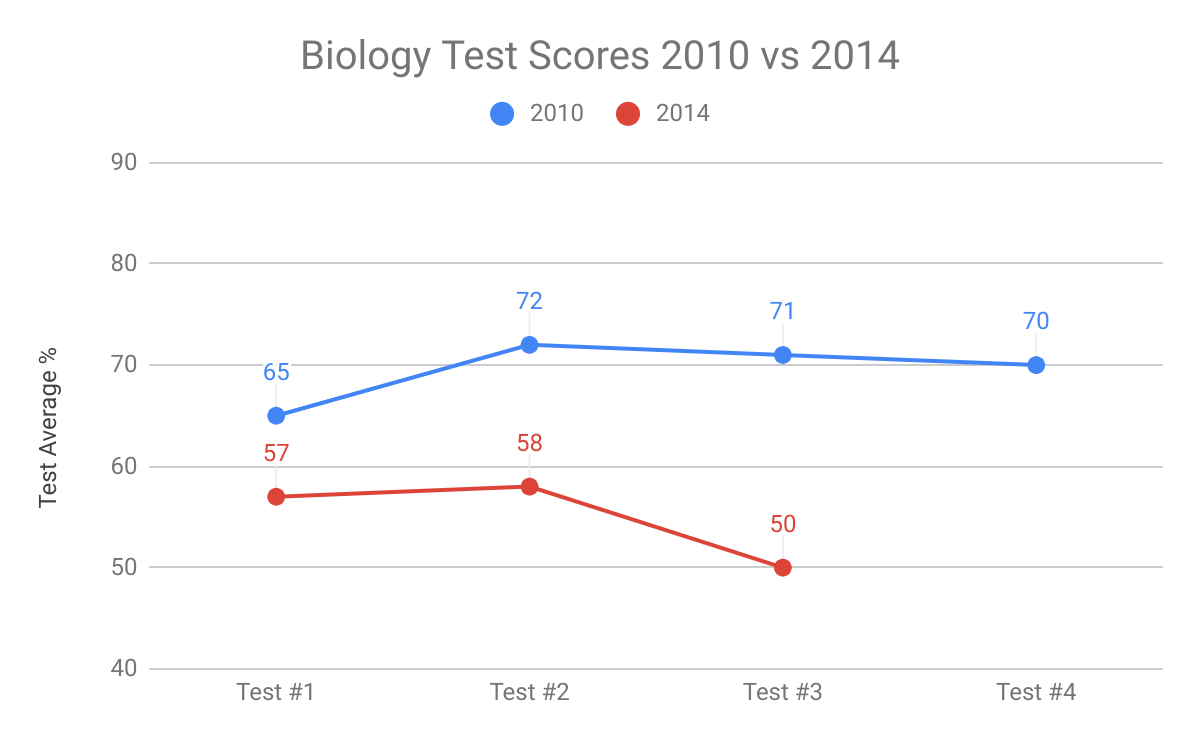
I held great hopes in turning the result around by the third test…

Instead of improvement it was a car crash. I could scarcely believe that the class test average was 50%, that all my increased effort resulted in a worse outcome. I felt like a complete failure. I discussed my results with my line manager, but sadly she was unsupportive. “What could YOU be doing differently?” the words echoed around in my mind. Had she not heard anything I said — the hours I spent making the exit cards, researching the best way to teach a concept, reteaching in different ways, all to be confronted with plummeting grades.


Her words prompted me to question my approach which was: “I think I can fix this problem if I have a better understanding of what my students know and understand.”


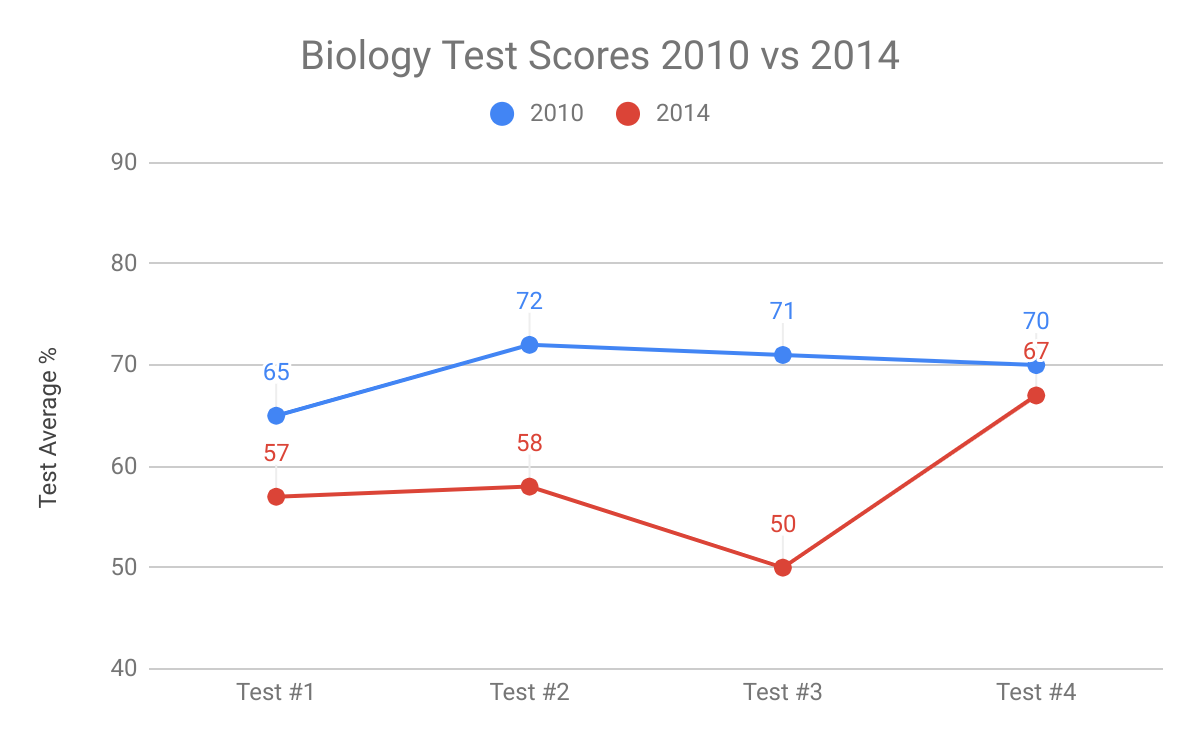
In my despair I had an epiphany. My approach was all wrong - I think I can fix this problem if I have a better understanding of what my students know and understand. The word “I” featured three times - as if teaching and learning was all about me! Out with the flawed exit card strategy, which I replaced with a more student-focused strategy — self-marked mini tests. The students would complete a mini test (no more than one A4 sheet/20 minutes) and navigate online to the answers. Using a comprehensive marking scheme, they would mark their own work. If they had any questions, they could ask me (e.g. “Do you think my answer is worth one or two marks out of four?”) but I showed zero interest in their result - after all, it’s not about me! 


This approach transferred the responsibility of learning to them. I showed no interest in their performance - they needed to step up and assume that responsibility for themselves. These grades are 100% real. 


Why was this approach so successful? I believe the benefits were many:

  1. Students had instant feedback instead of delayed feedback.

  2. The self-marking increased the student’s germane cognitive load. (increased germane cognitive load = increased retention and understanding)

  3. The test answers were hand written as they would be in a regular test - simulating an actual test better than an electronic form such as Pear Deck or Google Forms.

  4. During the test there is 100% sustained on-task behaviour. 

  5. The word “test” is more anxiety inducing than the word “exit card”. Optimal performance comes from optimal levels of anxiety. 

  6. Students kept the mini-tests as a valued revision resource.

  7. There was a shift in the way students responded to formative assessment/participated in formative assessment. The students viewed the exit cards as feedback for the teacher. The students viewed the mini-tests as feedback for themselves.

Delighted, but curious, I asked students what THEY thought about the improvement and the responses were positive, really positive. What the students said about the mini-tests:

  • They felt the practice was valuable.

  • They felt it improved their understanding of actual test questions.

  • They were annoyed that I had not done it earlier.

Here is an example of a mini-test with answers/mark schemes. You can see the mini-test itself was quick to prepare - just some screen grabs from old exams. The answers took a bit more time. DNA Structure and Replication mini-test ANSWERS 


The time it took to design and implement the mini-tests were more than offset by the benefits gained. This is now an embedded part of my practice.